
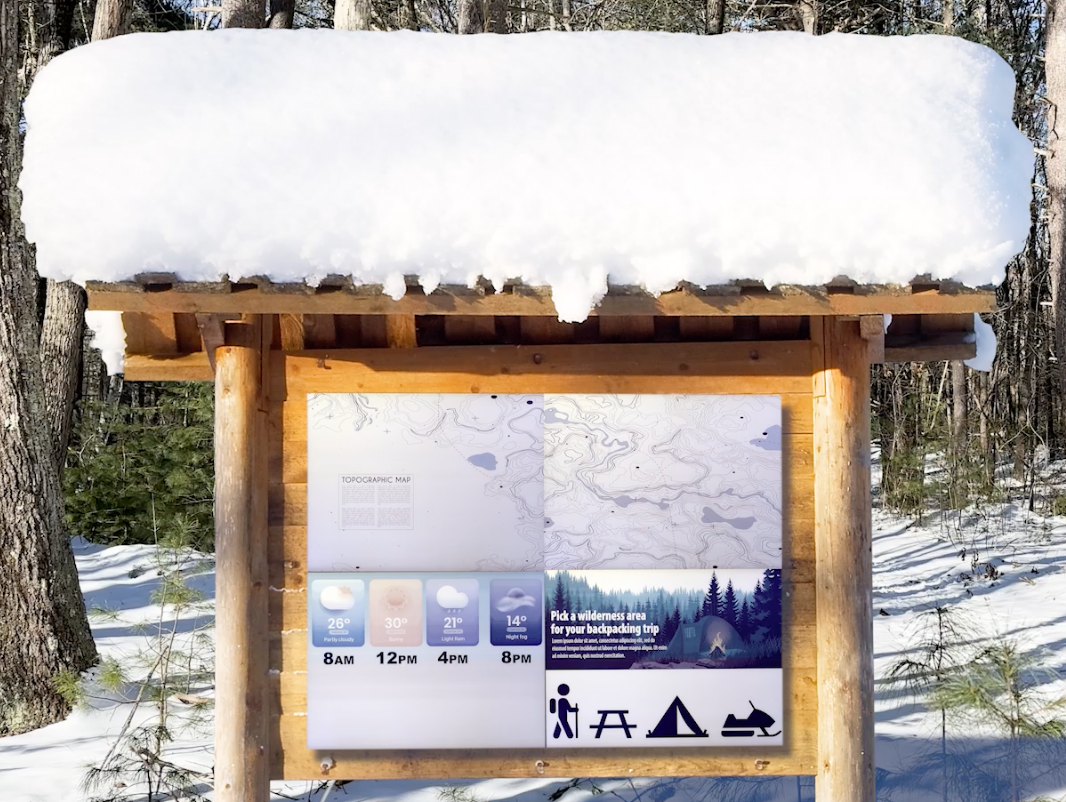

Outdoor displays face constant environmental challenges. From intense sunlight and heavy rain to freezing winters and extreme heat, digital signage installed outdoors must maintain visibility and reliability in conditions that can quickly overwhelm traditional display technologies. As cities, retailers, and transportation systems continue expanding outdoor digital infrastructure, durability and energy efficiency have become just as important as image quality. E Ink technology is designed to help solve these challenges.
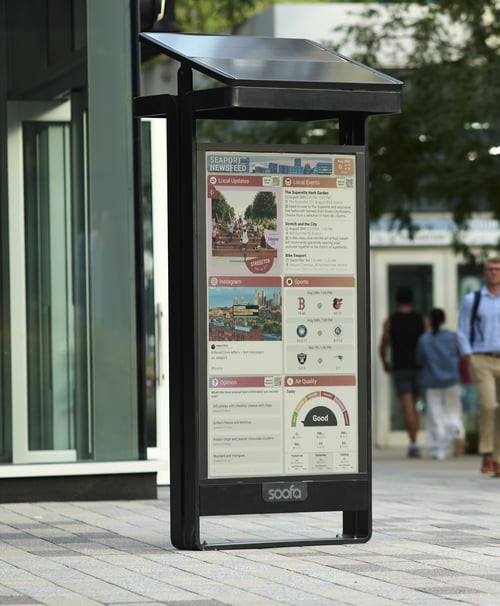
Source: E Ink
Readability in Direct Sunlight
Unlike conventional LCD and LED displays that rely on continuous backlighting, ePaper displays use reflective technology that works with ambient light rather than against it. This creates a viewing experience that remains clear and readable even in direct sunlight, where many traditional displays struggle with glare and washed-out images.
For outdoor applications, this difference is critical. Bus stop signs, smart city kiosks, parking displays, and retail signage must remain visible throughout the day regardless of lighting conditions. E Ink displays become easier to read in bright sunlight, delivering a paper like viewing experience that feels natural and comfortable for users.
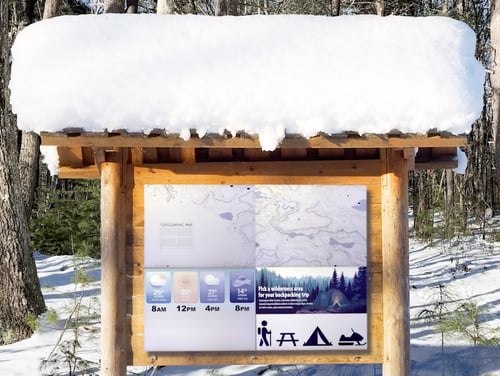
Source: E Ink
Built for Extreme Temperatures
Another major challenge for outdoor electronics is temperature fluctuation. Outdoor installations must endure both extreme heat and freezing cold while operating consistently year-round. E Ink displays consume power only when content changes, which significantly reduces heat generation. This low power design minimizes thermal stress on system components and allows for more efficient outdoor deployments. Platforms such as E Ink Kaleido 3 Outdoor and E Ink Marquee are engineered specifically for demanding environments where weather resilience matters most.
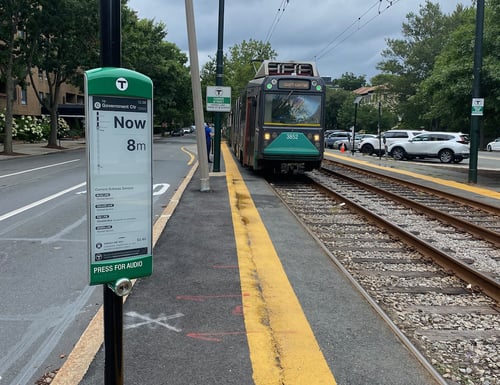
Source: MBTA
Energy Efficiency for Sustainable Installations
ePaper’s low power use makes it ideal for sustainable transportation and outdoor systems, especially in areas with limited power infrastructure. Its energy efficiency supports battery- and solar-powered applications, reducing operating costs while helping cities and businesses meet sustainability goals. For example, the MBTA in Boston has deployed E Ink signage on the Green Line, allowing passengers to stay informed and connected.
An additional advantage is that ePaper displays retain an image even when power is disconnected. Important information remains visible during outages, making the technology especially valuable for transportation systems, public information displays, and emergency communications.
A Smarter Approach to DOOH Advertising
As digital out of home advertising evolves, brands are looking for more sustainable display solutions. Traditional outdoor screens consume large amounts of electricity, especially at high brightness levels, while E Ink offers a lower power alternative that remains visible in direct sunlight. With ePaper, advertisers can deliver campaigns using a fraction of the power required by conventional displays, supporting more sustainable advertising networks and enabling deployment in remote or solar powered locations.
Designed for the Future of Outdoor Displays
While, outdoor environments are unpredictable, display performance should not be. By combining sunlight readability, low power consumption, and reliable operation in extreme conditions, ePaper technology is helping shape the future of outdoor digital displays. From smart cities to retail and transportation, E Ink is weatherproof by design and built for the realities of the outdoors.

Leave Comment